
【线上云德】疫情期间律师说(一百二十五)┃ 代持股协议中实际出资人与名义股东面对的法律风险分析
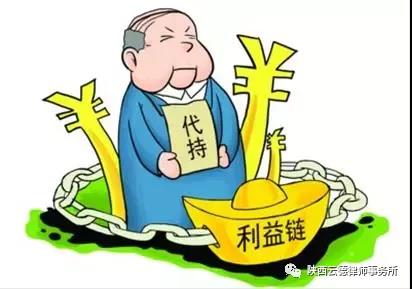
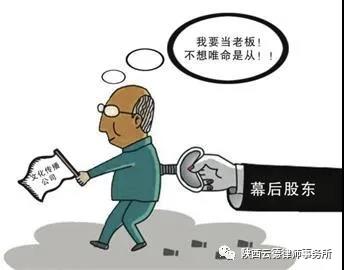
实际出资人与名义股东通过签订代持股协议完成股权投资,在现在企业对外投资中比较常见,得到多数股权投资人的青睐。但是,代持股协议为持股双方带来利益的同时也存在一定的法律风险。下文主要分析了代持股协议中的法律风险并提出了风险防范的措施。 股权代持是指实际出资人(隐名股东)与他人(显名股东)约定,以该他人名义代实际出资人履行股东权利义务的一种股权或股份处置方式。代持行为具有隐秘性和灵活性等特点。 The actual investor and the nominal shareholder complete the equity investment by signing a shareholding agreement, which is now more common in corporate outbound investment and is favored by most equity investors. However, the shareholding agreement brings benefits to both parties and there are certain legal risks. The following mainly analyzes the legal risks in the shareholding agreement and puts forward risk prevention measures. Equity holding refers to a method of disposal of shares or shares that the actual investor (anonymous shareholder) and others (named shareholders) agree to perform the rights and obligations of shareholders on behalf of the actual investor in the name of the other person. The holding behavior has the characteristics of privacy and flexibility.
(一)实际出资人的相关法律风险 1.股权代持行为被认定无效 一般而言,实际出资人与名义股东之间的代持行为,如没有无效事由,司法机关通常会基于当事方的意思自治,确认代持行为的法律效力。但当被投资企业为上市公司、银行和保险等金融机构,或涉及特殊准入要求的行业时,司法机关往往会以存在“以合法形式掩盖非法目的”、“损害社会公共利益”等情形为由,否定代持行为的法律效力。在代持行为被确认为无效的情形下,实际出资人仅能基于代持协议,要求名义股东补偿相关损失。 案例1:福建某A有限公司等诉福州B有限公司营业信托纠纷案中,最高人民法院指出:A有限公司、B有限公司签订的《信托持股协议》违反中国保险监督管理委员会制定的《保险公司股权管理办法》第8条,关于任何单位或者个人不得委托他人或者接受他人委托持有保险公司的股权的规定。尽管《保险公司股权管理办法》在法律规范的效力位阶上属于部门规章,并非法律、行政法规,但中国保险监督管理委员会是依据《保险法》第134条关于国务院保险监督管理机构依照法律、行政法规制定并发布有关保险业监督管理的规章的明确授权,为保证保险公司经营稳定、保护投资人和被保险人的合法权益、加强保险公司股权监管而制定。依照《合同法》第52条第4项等规定,本案A公司、B公司之间签订的《信托持股协议》属于损害社会公共利益,认定为无效。 2.名义股东自行处分股权或自身债务导致所代持的股权因被强制执行等而遭受损失 实际出资人无法证明第三人存在恶意的情形下,名义股东自行对其代持股权采取转让、抵押或其他处分行为,或代持股权因名义股东自身债务而被采取查封措施或强制执行措施时,实际出资人难以依据其与名义股东之间的代持协议对抗善意第三人。实际出资人只能就其所遭受的损失,要求名义股东进行赔偿。 案例2:某A公司与王某间签署了一份《股权代持协议》,由王某代为持有某A公司对北京Y公司享有的30%股权。王某未经原告股东同意,将原告持有北京Y公司的全部股份转让给被告李某,并于2015年3月5日与上述二人签订了股权转让协议。李某经工商登记,成为新的股东。原告某A公司为此诉请法院认定王某与李某股权转让协议无效,李某不能取得股权。法院经审理后认为,第三人李某并不知悉原告与被告间《股权代持协议》的存在,应当认定符合善意取得情形。法院依法驳回了原告所有诉讼请求,认定李某取得了该公司股权。 (1) Relevant legal risks of actual investors 1. Equity holding behavior was deemed invalid Generally speaking, if there is no reason for invalidity between the actual investor and the nominal shareholder, the judiciary will usually autonomy based on the parties’ will and confirm the legal effect of the proxy. However, when the invested enterprise is a financial institution such as a listed company, bank, or insurance, or an industry that involves special access requirements, the judiciary often finds that there are "legal forms to cover up illegal purposes" and "damage to the public interest". Therefore, it negates the legal effect of the holding act. In the event that the holding act is confirmed to be invalid, the actual investor can only request the nominal shareholder to compensate the related losses based on the holding agreement. Case 1: In the case of a business trust dispute in Fujian A Co., Ltd. v. Fuzhou B Co., the Supreme People’s Court pointed out that the "Trust Shareholding Agreement" signed by A Co., Ltd. and B Co., Ltd. violates the "Insurance" formulated by the China Insurance Regulatory Commission. Article 8 of the "Corporate Equity Management Measures" stipulates that no unit or individual may entrust others or accept the entrustment of others to hold equity in insurance companies. Although the "Measures for the Management of the Equity of Insurance Companies" is a departmental rule in terms of the level of effectiveness of legal regulations, not a law or administrative regulation, the China Insurance Regulatory Commission is based on Article 134 of the "Insurance Law" The regulations are formulated and issued with a clear authorization of the regulations on the supervision and management of the insurance industry, which are formulated to ensure the stability of the insurance company’s operations, protect the legitimate rights and interests of investors and insured persons, and strengthen the supervision of insurance companies’ equity. According to Article 52, Item 4 of the Contract Law, the Trust Shareholding Agreement signed between Company A and Company B in this case is harmful to the public interest and is considered invalid. 2. Nominee shareholders dispose of their own equity or their own debt resulting in the loss of the equity held by them due to forced execution, etc. When the actual investor cannot prove the maliciousness of the third party, the nominal shareholders take the transfer, mortgage or other sanctions on their behalf, or the acting equity is seized or enforced due to the debt of the nominal shareholders It is difficult for actual investors to fight against a bona fide third party based on the holding agreement with their nominal shareholders. The actual investor can only demand compensation from the nominal shareholders for the losses suffered. Case 2: A company and Wang signed a "shareholding agreement", which is held by Wang for holding 30% of the equity of company A in Beijing Y. Without the consent of the plaintiff's shareholders, Wang transferred all the shares held by the plaintiff to Beijing Defendant Li, and signed an equity transfer agreement with the above two on March 5, 2015. Li was registered as a new shareholder by the industrial and commercial registration. Plaintiff A Company appealed to the court to find that the equity transfer agreement between Wang and Li was invalid, and Li could not obtain the equity. After trial, the court held that the third party, Li Mou, was unaware of the existence of the "shareholding agreement" between the plaintiff and the defendant, and should determine that it was in good faith. The court dismissed all the plaintiff’s claims in accordance with the law and determined that Li had obtained equity in the company.
3.实际出资人主张显名诉求不被支持。 实际出资人在未取得被投资企业其他股东半数以上同意的情形下,其有关显名的诉求(包括请求被投资企业变更股东、签发出资证明书、记载于股东名册、记载于公司章程并办理登记等)难以被支持。一般来说, 实际出资人持有公司签发的股权证明、出资证明书、将自己记载为公司股东的股东名册、公司章程等证据材料并诉请确认股东资格的,法院可以认定实际出资人具有股东资格,但公司如能反证证明上述材料记载错误的,法院需要进行实质审查。 案例3:刘某主张其为登记在王某名下的湖南A公司股权实际出资人,其与王某是代持股关系,请求确认其为股权所有人,王某配合办理相应的股权变更登记手续等。 刘某提交的证据主要有银行资金划转凭证,证人证言,其他书面证据材料等。其中,银行资金划转凭证证明刘某于2018年1月13日和1月10日向王某银行账户两次汇款340.4万元和5213.76万元,王某在收到该两笔款项后于当日即汇入湖南A公司银行账户,用于在该公司的股权出资及增资。法院经调查认定刘某向王昊汇款这一事实,但刘某未说明汇款用途,也未能提交具有委托王某认购湖南A公司股份内容的其他证据。 王某收到刘某汇款资金后已经将货币资金转换为股权财产,财产形态的转换是基于王某的意思表示和行为完成的,刘某没有提供其参与处分将其汇款货币资金转换为股权财产形态的证据。 法院判决:代持股关系应当基于委托关系形成,委托关系为双方法律行为,需双方当事人有建立委托关系的共同意思表示,签订委托合同或者代持股协议,对未签订合同但双方当事人有事实行为的,也可以依法认定存在委托代持股关系,并以此法律关系确定双方当事人的民事权利和义务。单方法律行为不能建立委托代持股份关系。本案中刘某未提交其与王某之间关于建立委托关系或者代持股关系的协议,其提交的其他证据也不能证明其与王某之间对委托关系或者代持股关系形成了共同意思表示或者其间形成了事实上的代持股关系。因刘某在本案中未能提供直接证据证明其主张,提交的间接证据未能形成完整的证据链,不具有排他性,法院最终不支持原告的诉求。 3. The actual funder advocates that the claim to be named is not supported. The actual investor's claims concerning the apparent name (including requesting the invested company to change its shareholders, signing a capital certificate, recorded in the register of shareholders, recorded in the company's articles of association and registered for the case of not obtaining the consent of more than half of the other shareholders of the invested company Etc.) difficult to be supported. Generally speaking, if the actual investor holds proof of equity issued by the company, the capital contribution certificate, the register of shareholders who records himself as the company’s shareholders, the company’s articles of association and other evidence and appeals for confirmation of shareholder qualifications, the court may determine that the actual investor has shareholders Qualification, but if the company can prove the fact that the above materials are wrong, the court needs to conduct a substantive review. Case 3: Liu claimed that he was the actual investor of the equity of Hunan A Company registered under Wang’s name, and he and Wang were on behalf of the shareholding relationship, requesting confirmation that he was the owner of the equity, and Wang cooperated with the corresponding equity change registration Procedures etc. The evidence submitted by Liu mainly includes bank fund transfer certificates, witness testimonies, and other written evidence. Among them, the bank fund transfer certificate proves that Liu made two remittances of 3.404 million yuan and 52.137 million yuan to Wang’s bank account on January 13 and January 10, 2018. Wang received the two payments on the same day Remitted to the bank account of Hunan A Company for equity investment and capital increase in the company. After investigation, the court found the fact that Liu remitted money to Wang Hao, but Liu did not specify the purpose of the remittance, and failed to submit other evidence that entrusted Wang to subscribe for shares in Hunan A Company. After receiving the remittance funds from Liu, Wang has converted the monetary funds into equity property. The conversion of the property form was completed based on Wang’s intention and behavior. Liu did not provide his participation in the punishment to convert his remittance monetary funds into equity property. Evidence of form. The court ruled that the relationship of shareholding should be based on the entrusted relationship. The entrusted relationship is a legal act of both parties. Both parties need to have a common intention to establish an entrusted relationship. Signing an entrustment contract or an agreement on behalf of the shareholding agreement. In the event of an act, it may also be determined that there is a relationship of entrusted shareholding according to law, and this legal relationship is used to determine the civil rights and obligations of both parties. One-way legal behavior cannot establish the trust-holding shareholding relationship. In this case, Liu did not submit an agreement between him and Wang regarding the establishment of an entrusted relationship or shareholding relationship, and other evidence submitted by him could not prove that he and Wang had a common meaning in the entrusted relationship or on behalf of the shareholding relationship. Indicate or formed a de facto shareholding relationship. Because Liu failed to provide direct evidence in this case to prove his claim, the indirect evidence submitted failed to form a complete evidence chain and was not exclusive, and the court ultimately did not support the plaintiff’s claim.
(二)名义股东法律风险 1.在未出资或出资不实范围内对公司债务承担清偿责任 根据《公司法司法解释三》第二十六条的规定,公司债权人以登记于公司登记机关的股东未履行出资义务为由,请求其对公司债务不能清偿的部分在未出资本息范围内承担补充赔偿责任,股东以其仅为名义股东而非实际出资人为由进行抗辩的,人民法院不予支持。名义股东根据前款规定承担赔偿责任后,向实际出资人追偿的,人民法院应予支持。说明名义股东应在其未出资或出资不实的本息范围内,对被投资企业债务不能清偿的部分承担补充赔偿责任。 案例4:2014年7月24日,由某面粉公司发起,与熊某、罗某、张某、李某等共同出资1亿元登记设立某A贷款公司。2013年11月8日,张某、罗某分别与A贷款公司签订股权转让协议,约定:张某将其持有的A贷款公司10%全部股权转让给某B面粉公司,罗某将其持有的A贷款公司10%股权中5%的股权转让给某B面粉公司。 本案中,熊某、罗某、张某、李某系借款出资。A贷款公司验资后将1亿元注册资金立即转出99015050.50元,法院调取证据证明其中3600余万元又最终回款至出资借款人账户,即注入资本随后转出。 债权人认为该行为构成抽逃出资,要求股东在抽逃出资本息范围内对公司债务不能清偿的部分承担补充赔偿责任。某B面粉公司提交证据证明其仅为名义股东而非实际出资人,全部股东同意某B面粉公司不对A贷款公司经营及债务承担责任。法院判定:某B面粉公司系某A贷款公司设立时的登记股东,对外产生公示公信效力。名义股东根据前款规定承担赔偿责任后,向实际出资人追偿的,人民法院应予支持。依据上述规定,登记股东不得以其与实际出资人之间的内部约定对抗公司外部债权人。 2.在未经被投资企业其他股东同意的情形下,难以退出公司 名义股东想要退出原公司,应该通过与实际出资人签订股权转让协议的形式退出,但现实往往是实际出资人不愿意配合办理或者不愿意显名。名义股东仅解除代持股协议并不能使其脱离公司。在其他股东不同意或不配合的情形下,名义股东也难以退出公司,通过减资、向实际出资人以外的其他人转让股权等方式退出原公司,都存在各种困难。 (2) Legal risks of nominal shareholders 1. Within the scope of uninvested or unrealized investment, assume responsibility for paying off the company's debt According to Article 26 of the "Judicial Interpretation 3 of the Company Law", the company's creditors request that it be supplemented within the scope of the unpaid capital interest on the ground that the shareholders registered in the company registration authority have not fulfilled their capital contribution obligations. If the shareholder defends the liability for compensation on the ground that it is only the nominal shareholder and not the actual investor, the people’s court shall not support it. After the nominal shareholder assumes liability for compensation according to the provisions of the preceding paragraph and recovers from the actual investor, the people’s court shall support it. Explain that the nominal shareholder shall bear the supplementary compensation liability for the part of the invested enterprise’s debt that cannot be repaid within the scope of its principal and interest that has not been invested or is not true. Case 4: On July 24, 2014, initiated by a flour company, it jointly invested 100 million yuan with Xiong Mou, Luo Mou, Zhang Mou, Li Mou to register to establish an A loan company. On November 8, 2013, Zhang Mou and Luo Mou signed equity transfer agreements with A loan company respectively, stipulating that Zhang Mou will transfer all 10% of the equity held by A loan company to a B flour company, and Luo Mou will hold it Some A loan companies transfer 5% of the 10% equity to a B flour company. In this case, Xiong Mou, Luo Mou, Zhang Mou, and Li Mou were borrowing capital. The loan company A immediately transferred 100 million yuan of registered capital to 99,050,050.50 yuan after the capital verification. The court obtained evidence to prove that more than 36 million yuan was finally returned to the capital borrower's account, that is, the capital was injected and then transferred out. The creditor believes that this act constitutes withdrawal of capital, and requires shareholders to bear supplementary compensation liability for the part of the company's debt that cannot be paid off within the scope of withdrawal of capital interest. A B Flour Company submitted evidence that it was only a nominal shareholder and not an actual investor. All shareholders agreed that B Flour Company would not be liable for the operation and debt of A Loan Company. The court ruled that a B flour company was a registered shareholder when an A loan company was established, and had publicity and credibility. After the nominal shareholder assumes liability for compensation according to the provisions of the preceding paragraph and recovers from the actual investor, the people’s court shall support it. According to the above regulations, the registered shareholder shall not use its internal agreement with the actual investor to confront the company’s external creditors. 2. It is difficult to withdraw from the company without the consent of the other shareholders of the invested company Nominal shareholders want to withdraw from the original company by signing an equity transfer agreement with the actual investor, but the reality is often that the actual investor is unwilling to cooperate in handling or not to be named. Nominee shareholders can only dissolve the nominee shareholding agreement and cannot withdraw them from the company. In the case where other shareholders do not agree or do not cooperate, it is also difficult for the nominal shareholders to withdraw from the company. There are various difficulties in exiting the original company by reducing capital, transferring equity to others other than the actual investor.
(三)避免出现股权代持争议的意见 1.针对实际出资人 (1)为了避免代持行为被认定无效,实际出资人应当提前规划设立企业的类型:公司的未来盈利是否合理,发展的愿景和目标是否为了后期上市,成立公司性质是否为银行、保险、证券等金融机构的禁止代理行为。 (2)签署代持协议,在协议中作出妥善安排:将代持双方的权利义务明确细化(主要是出资金额、出资方式、代持方式、代持期限、代持费用、违约责任等)。 (3)转账时注明款项的用途和目的,保留对公司实际出资的原始凭证(银行或者支付宝的转账记录)、微信聊天记录、公司设立时股东参加决策文件等。 (4)将对公司出资的事实,及时书面通知其他股东或者争取及时获取被投资企业其他半数以上股东的确认(如要求股东出具同意函),并且,主动行使股东权利并留存相应证据,如参加股东会在会议记录或决议上签名,担任或指定人员担任董事、法定代表人、财务负责人、经理,从公司领取分红等。 2.针对代持人(名义股东) 在代持协议签订前,代持人与实际出资人将代持行为可能引发的法律后果提前做好协议,比如:实际出资人不实出资或者没有按期协议约定出资到位,导致名义股东受到损失,造成的各种损失由实际出资人承担,名义股东除了可以要求实际出资人给予代持行为相应的服务费用外,还要求其提供相应的第三方担保,以确保其不会因代持行为遭到损失,即使有损失,损失也可以得到合法合理补偿。 (3) Opinions on avoiding disputes over equity holdings 1. For actual investors (1) In order to prevent the holding behavior from being deemed invalid, the actual investor should plan the type of establishment of the company in advance: whether the company’s future profit is reasonable, whether the development vision and goals are for later listing, and whether the nature of the established company is bank, insurance, securities And other financial institutions are prohibited from acting. (2) Sign the holding agreement, and make proper arrangements in the agreement: clearly define the rights and obligations of both parties (mainly the amount of capital, the method of investment, the method of holding, the duration of holding, the cost of holding, the liability for breach of contract, etc.) . (3) Indicate the purpose and purpose of the funds when transferring, and keep the original vouchers (transfer records of banks or Alipay), WeChat chat records, and shareholders’ decision-making documents when the company was established. (4) Will notify other shareholders of the fact of the company’s capital contribution in writing in a timely manner or strive to obtain confirmation from more than half of the other shareholders of the invested company in a timely manner (such as requiring shareholders to issue a consent letter), and actively exercise shareholder rights and retain corresponding evidence, such as participation The shareholders' meeting will sign the minutes or resolutions of the meeting, act as or appoint persons to serve as directors, legal representatives, financial managers, managers, and receive dividends from the company. 2. For nominees (nominal shareholders) Before signing the nominee agreement, the nominee and the actual investor will make an agreement in advance on the legal consequences that may arise from the act of holding the agent, such as: the actual investor does not actually contribute or fails to make the agreed capital contribution in place, resulting in losses to the nominal shareholders, The various losses caused are borne by the actual investor. In addition to the actual shareholder can request the actual investor to provide the corresponding service fee for the holding act, they also require them to provide corresponding third-party guarantees to ensure that they will not be subject to the holding act Loss, even if there is a loss, the loss can be legally and reasonably compensated. |


- 找精英律师
- 服务领域
- 看全国各所