
【线上云德】疫情期间律师说(四十九)|合同履行之不可抗力
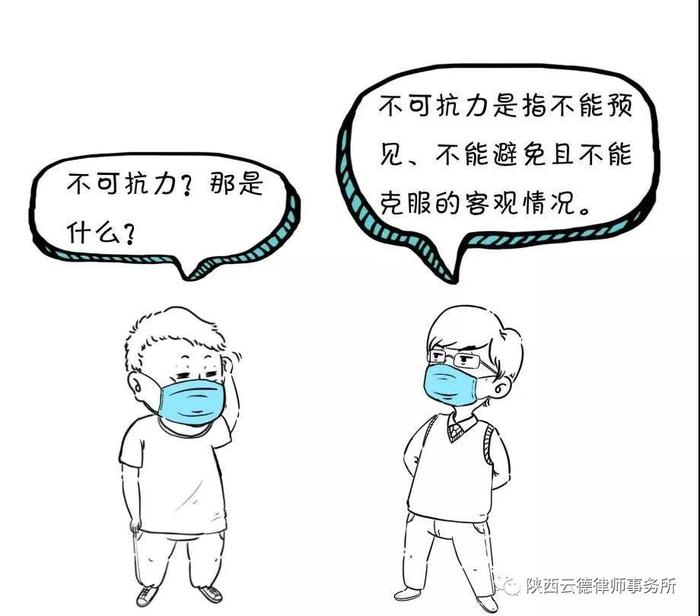
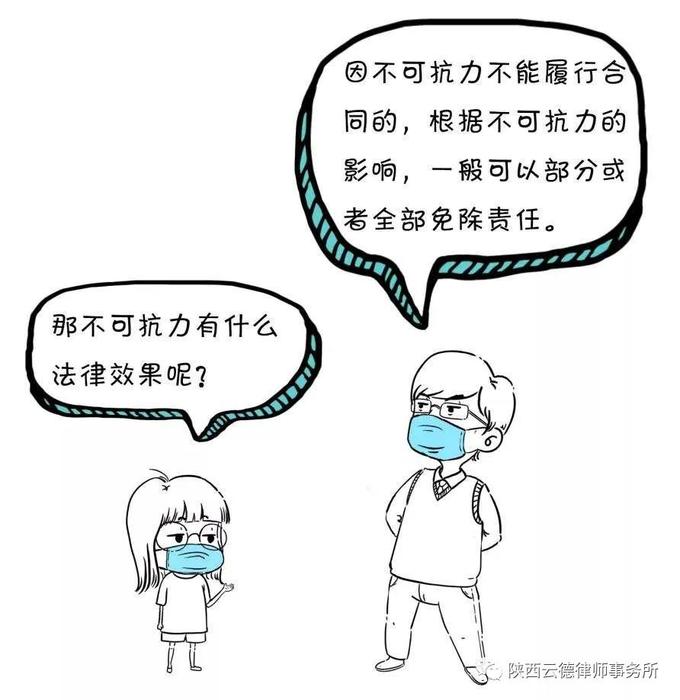
2019年12月以来,我国出现新型冠状病毒感染的肺炎(下称“新冠肺炎”)疫情,全国各地陆续采取一系列防控措施。这势必对部分民商事合同的履行产生影响,一些当事人可能出现履行迟延甚至履行不能。对此,合同主体应当及早作出法律应对,防范法律风险,力争减轻和避免损失疫情属于不以一般人的意志为转移而发生的客观事件。疫情本身是否构成不可抗力事件,存在一定争议。根据现有对本次新冠病毒性肺炎疫情的数据信息分析,其患病率不高于流感,致死率在湖北地区高于流感,在湖北以外地区则低于流感。如果不考虑本次疫情在各地的传播强度和传播后果,笼统地认为本次疫情本身构成不可抗力,则流感爆发似乎也应认定为不可抗力,显然有悖常理。事实上,疫情与地震等自然灾害不同,地震本身可能导致震区人们生产生活、履行合同所依赖的能源、通讯、交通、场所等物质基础损毁,疫情本身不会产生上述影响。 Since December 2019, there has been an outbreak of pneumonia infected in China, and a series of prevention and control measures have been taken throughout the country. This is bound to affect the performance of some civil and commercial contracts, some parties may delay or even fail to perform. In this regard, the contract subject should make legal response as soon as possible, prevent legal risks, and strive to reduce and avoid losses. Whether the epidemic itself constitutes a force majeure event, there is some dispute. According to the existing data analysis of the novel coronavirus pneumonia, the morbidity is not higher than influenza, and the fatality rate is higher than influenza in hubei province, and lower than influenza in other areas. It is obviously counterintuitive to consider that the outbreak itself constitutes a force majeure event without considering the spread intensity and consequences of the outbreak in various places. In fact, the epidemic situation is different from the earthquake and other natural disasters. The earthquake itself may lead to the destruction of the energy, communications, transportation, places and other material foundation that people in the earthquake area rely on to work and live and fulfill the contract. The epidemic situation itself will not have the above impact.
疫情防控措施是政府或者社区、单位、个人为应对疫情采取的应对措施,属于他人或者自身的避险行为。各级政府、社区等依法采取的防控措施不以一般人的意志为转移,对特定区域内的一般社会公众具有普遍的法律约束力;单位依据对其有法律约束力的行政命令采取的疫情相应防控措施亦具有正当合法性。政府、社区、单位及个人在法律规定之外采取的过度防控措施如对他人(包括商事合同的相对人)产生不利影响的,则不具有法律上的正当性。 Epidemic prevention and control measures are taken by the government or communities, units or individuals in response to the epidemic, and they are hedging behaviors of others or themselves. The prevention and control measures taken by governments and communities at all levels shall not be transferred by the will of ordinary people, and shall have a general legal binding force on the general public in a specific region. The corresponding epidemic prevention and control measures taken by the unit according to the legally binding administrative order shall also have the legitimacy. Excessive prevention and control measures taken by the government, communities, units and individuals beyond the provisions of the law shall not have legal legitimacy if they adversely affect others (including counterparts of commercial contracts). 如果商事活动的当事人被疫病感染,属于罹患传染病。尽管在疫情严重的地区,一般人被感染疫病的概率高于非疫情地区,也高于罹患其他非疫病的概率,但是人被感染疫病并非必然事件,正如登山与日常散步相比,增加了意外受伤的概率,但是在两者情形下人体受伤害均应构成意外事件。因此,当事人罹患传染病导致合同履行障碍的,与罹患其他疾病或身体受到伤害一样,民法理论与司法实践中均作为“意外事件“处理。 If a party to a business activity is infected by a disease, it is an infectious disease. Despite the SARS epidemic area, the average person infected disease probability higher than that of non epidemic area, and higher than suffer from other disease probability, but people infected disease is not a certain event, mountain as compared with daily walk, increase the probability of accidental injury, but in both cases the body hurt shall constitute an accident. Therefore, the parties suffering from infectious diseases that lead to the performance of the contract obstacles, like suffering from other diseases or physical injury, civil law theory and judicial practice are treated as "accidents".
因此,全国人大常委会法工委发言人所称“对于因此不能履行合同的当事人来说,属于……不可抗力“中的因”此“,应当正确理解为政府采取的相应疫情防控措施,而非疫情本身,也不包括因被疫病感染而罹患疾病的情形。 Therefore, the NPC standing committee spokesman said that "for the parties unable to perform the contract, it is... The "reason" of force majeure should be correctly understood as the corresponding epidemic prevention and control measures taken by the government, not the epidemic itself, and it does not include the case of disease caused by the epidemic. 综上,疫情与被疫病感染不构成不可抗力事件,疫情防控措施则可能但并不当然构成不可抗力事件。 To sum up, the epidemic situation and being infected by the epidemic disease do not constitute a force majeure event, while the epidemic prevention and control measures may but do not certainly constitute a force majeure event. |
- 找精英律师
- 服务领域
- 看全国各所