
【线上云德】疫情期间律师说(二)|疫情期间,民众如何对政府信息进行监督、政府如何把握信息公开的法律边界?
疫情当前,微信群里、朋友圈里充满了各种有关新冠肺炎的消息,社会各界公众的讨论点从疫情本身,继而开始讨论武汉红十字会、湖北红十字会,热议政府关于疫情发布时间、8名据说是散布“谣言”者的吹哨人、流行病学专家抢着发论文等等……不一而足。这些信息如果不够客观,就会对公众的心理和行为产生很大的影响。当公众的安全需要威胁的时候,自然想要消除危险因素,尤其在很多因素不确定的时候,跟风从众就成为一个相对便利和安全的做法。比如疫情刚爆发的时候,大家就开始抢购口罩、抢购双黄连、找有名的中医出治疗方案、消毒杀菌的各种奇葩组合等等,其实这就是“恐慌比病毒传播得更快”的现象。这种现象产生的根源在哪?刚开始的时候我们为什么会恐慌?25天过去了,是不是现在我们自己也能感觉到没有之前恐慌了?实际上,在所有重大事情面前,需要我们理性积极的去应对。我们如何做到“精准施策”?因为小到个人决策,大到各级地方政府、国家层面的决策,自然都需要充分的信息汇集才能做到,否则作出的决策就是误判。新冠肺炎疫情防控期间,政府在信息公开方面是否把握住了法律边界?公众、舆论如何通过政府的信息公开进行更好的监督?具体的法律依据有哪些?本文从三个方面作出如下分析。
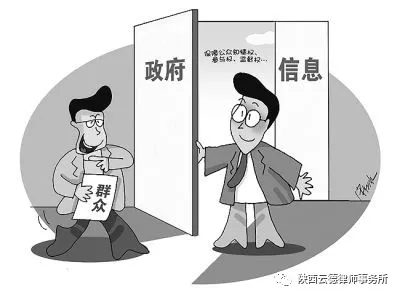
一、政府该如何公布疫情信息?地方政府未经授权情况下如何依法及时披露?到底谁说了算?
这个话题缘起于1月27日,武汉市市长在接受央视采访时被问及“信息披露是否及时”回应称,他说依据传染病防治法,地方政府必须经过授权后才可披露。所以当天各大新闻都开始“对武汉市政府无传染病疫情公布权限”展开了讨论。不妨再对这次疫情的时间节点复盘一下:2019年12月31日,武汉市卫健委首次公开发布通报称,有多例肺炎病例与华南海鲜城有关联。1月9日专家组确定病原体为新型冠状病毒。而早在2019年12月8日,武汉即发现第一例不明原因肺炎。不管是哪个时间点,公众认知上都不能接受到1月20日才公布,23号才开始发布信息启动一级响应,这个时候已经有30万以上的人从武汉出去,也就意味着大量的感染者已经开始输出,所以公众不买账。
但是,《中华人民共和国传染病防治法》第三十八条规定:国家建立传染病疫情信息公布制度。国务院卫生行政部门定期公布全国传染病疫情信息。省、自治区、直辖市人民政府卫生行政部门定期公布本行政区域的传染病疫情信息。传染病暴发、流行时,国务院卫生行政部门负责向社会公布传染病疫情信息,并可以授权省、自治区、直辖市人民政府卫生行政部门向社会公布本行政区域的传染病疫情信息。公布传染病疫情信息应当及时、准确。
由此可见,当地政府在未经国家卫健委授权的情况下,确实无权对外公布疫情信息。但是,本人认为,此处的“疫情信息”不应仅仅是指已经确定病因结果的新冠肺炎以及确定为该传染病系乙类转染病这个事实信息,因为除上述信息外,本次疫情在已经严重危及到公共安全和公共利益的情况下,应该根据《突发公共卫生事件应急条例》第二十条的规定:行政机关应当主动公开 “突发公共事件的应急预案、预警信息及应对情况”。因此,作为当地政府,除了疫情以外,政府的相关防疫准备、预防措施、防疫机关设置等等很多信息都可以公开,而不是说所有疫情信息不能公开。
《中华人民共和国政府信息公开条例》第六条:行政机关应当及时、准确地公开政府信息。行政机关发现影响或者可能影响社会稳定、扰乱社会和经济管理秩序的虚假或者不完整信息的,应当发布准确的政府信息予以澄清。第九条:公民、法人和其他组织有权对行政机关的政府信息公开工作进行监督,并提出批评和建议。第二十条:行政机关应当依照本条例第十九条的规定,主动公开本行政机关的下列政府信息:(十二)突发公共事件的应急预案、预警信息及应急措施。
根据上述规定,如果当地政府第一时间作出合理预警,建议公众少公开聚会或者提醒公众应当谨慎对待,建议公民要戴口罩做好防护等呼吁性措施,一系列极易引发疫情传播的聚会理应得到避免。因此,政府信息公开应当把及时性放在第一位,公众才能更好的行使监督权力,进而去行使自己的参与权,为法治政府公信力增添力量。
二、疫情需要,公民的个人信息被公开怎么办?如何防止患者被“人肉搜索”甚至被污名化?
如果说政府信息公开是为了满足公众的知情权和参与权,那是不是意味着公众想知道的内容政府都可以公开呢?本次疫情期间,很多地方政府公开了确诊病例或者疑似病例的详细个人信息,身份证号、姓名、个人详细的活动区域、亲属关系等等,有一部分患者被“人肉搜索”,甚至被贴上行走的病毒等污名化标签。那么,对于公众自身而言,个人信息的法律边界在哪里?政府在行使信息公开权利时如何平衡个人利益与公共利益呢?
而法规规定的隐私权是指在生活中,每个人都有不愿让他人知道的个人生活的秘密,这个秘密在法律上称为隐私,如个人的私生活、日记、照相薄、生活习惯、通信秘密、身体缺陷等。自己的秘密不愿让他人知道,是自己的权利,这个权利就叫隐私权。
《政府信息公开条例》第十五条规定,涉及商业秘密、个人隐私等公开会对第三方合法权益造成损害的政府信息,行政机关不得公开。但是,第三方同意公开或者行政机关认为不公开会对公共利益造成重大影响的,予以公开。
因此,尽管法律条文无法穷尽所有可能发生的社会情状,但是政府在行使信息公开权利时仍应以坚持公众需求为导向,坚持底线思维,做好遵守法律的原则并保障公众合法权益的权衡和取舍,从最大限度满足公众需求的角度去公开政府信息。作为公众,在享有监督权的同时,也应该在个人需求得到满足的基础上,以最大的善意去维护他人信息。
三、疫情当前,疾控中心在整个传染病防治法制体系中应该处于什么样的地位?如何让科研与人民健康同频共振?
1月29日,由国家疾控中心、湖北省疾控中心等多家单位联名发表的《新型冠状病毒感染的肺炎在中国武汉的初期传播动力学》的论文在权威医学期刊《新英格兰医学杂志》(NEJM)官网上发表。论文通过数据分析得出结论:“自2019年12月中旬以来,密切接触者之间发生了人传人。”这个新闻引发了外界的质疑,因为人传人的结论在中国被真正公开时间是1月20日,由钟南山院士对外发布的。
因此,我们作为法律人,从这个话题里面应该关注的是疾病预防控制机构也就是说各级疾控中心到底在本次疫情防控中应该扮演什么样的作用?起到什么样的作用?我国的应急管理体制应当如何进一步完善?当公共卫生数据预判结论可能影响人民健康的时候,如何让数据更有温度有力量的让普通人可知可感?
在突发公共卫生事件应急措施方面,相关法律法规主要有《传染病防治法》、《突发事件应对法》、《突发公共卫生事件应急条例》等。根据《传染病防治法》第四十条规定,疾病预防控制机构发现传染病疫情或者接到传染病疫情报告时,应当及时采取下列措施:(一)对传染病疫情进行流行病学调查,根据调查情况提出划定疫点、疫区的建议,对被污染的场所进行卫生处理,对密切接触者,在指定场所进行医学观察和采取其他必要的预防措施,并向卫生行政部门提出疫情控制方案;(二)传染病暴发、流行时,对疫点、疫区进行卫生处理,向卫生行政部门提出疫情控制方案,并按照卫生行政部门的要求采取措施;(三)指导下级疾病预防控制机构实施传染病预防、控制措施,组织、指导有关单位对传染病疫情的处理。
由上述规定可知,疾病预防控制机构的科研结果对于整个防疫工作有着至关重要的作用,甚至作为卫生行政部门的决策依据;但是疾控中心是科研机构、卫生行政部门的下属事业单位(根据《中央编办关于国家卫生健康委所属事业单位机构编制的批复》,设立中国疾病预防控制中心,为国家卫生健康委直属事业单位),则意味着该中心没有行政管理职能,整个卫生体系是把专业技术人员的工作和政府的行政管理完全分开了,其组织地位与其在整个传染病防治法制体系中的至关重要性不相匹配,那么,公共卫生数据无法通过行政部门进行信息公开,意味着这些关键的数据对于社会公众来说是普遍无感的,这也是当前我国的应急管理体制存在的问题所在。
疾控中心作为一个兼具控病职能和研究能力的机构,不仅要重于科学研究,更要在科研成果与人民健康相互影响的时候,第一时间选择去执行更有利于人民健康的管理行为,否则,对于社会科学而言是没有灵魂的,更是没有使命感的体现,因此,也呼吁通过法律规制能够确定诸如疾控中心等公益性质的事业单位以法定的行政职责,确定其在传染病防控体系中的重要行政主体地位。
“理论一经掌握群众,也会变成物质力量。”所以最好的论文要永远写在中国大地上!不管我们身处何方、身处何地,都应该尊崇生命、敬畏生命!
Epidemic WeChat group, the current in the circle of friends is full of news of the pneumonia, the social from all walks of life of the public discussion points from the disease itself, and then start talking about the Red Cross, the Red Cross in Hubei province, Wuhan government about the outbreak time, eight doctors are said to be the spread of the "Rumours" whistled, epidemiologists rob to send the papers, etc... And so on. If the information is not objective enough, it will have a great impact on the public psychology and behavior. When the public's safety needs to be threatened, it is natural to want to eliminate the dangerous factors, especially when many factors are uncertain, it becomes a relatively convenient and safe practice to follow suit. For example, when the outbreak first broke out, people began to buy masks, to buy “ShuangHuangLian”, to find a famous Chinese medicine treatment plan, disinfection and sterilization of all kinds of strange combinations and so on, in fact, this is "panic than the virus spread faster" phenomenon. What is the root cause of this phenomenon? Why did we panic in the first place? After 25 days, can we feel the panic now? In fact, in front of all the important things, we need to deal with them rationally and positively. How do we achieve "precision"? For decisions as small as individual decisions, as large as decisions made by local governments at all levels and at the national level, it is only natural that sufficient information collection is needed to achieve this, otherwise the decision made will be misjudged. During the prevention and control of the outbreak of the pneumonia, did the government grasp the legal boundary in terms of information disclosure? How can the public and public opinion conduct better supervision through the disclosure of government information? What are the specific legal grounds? This paper makes the following analysis from three aspects.
I. how should the government release information on the epidemic? How do local governments disclose information in a timely manner without authorization? Who's in charge?
The topic started on January 27, when the mayor of Wuhan was asked by CCTV whether the information was disclosed in a timely manner. He said that according to the law on the prevention and treatment of infectious diseases, local governments must be authorized to disclose the information. Therefore, the major news of the day began to discuss "the authority of Wuhan government to announce no epidemic situation of infectious diseases". On December 31, 2019, the health and fitness commission of Wuhan announced publicly for the first time that a number of pneumonia cases had been linked to the south China seafood city. On 9 January the team identified the pathogen as a novel corona-virus. As early as December 8, 2019, the first case of unexplained pneumonia was found in Wuhan. No matter what the time, it is not acceptable for the public to release the information on January 20 and release the information on January 23 to launch the first-level response. At this time, more than 300,000 people have left Wuhan, which means that a large number of infected people have started to export, so the public does not buy it.
However, article 38 of the law of the People's Republic of China on the prevention and control of infectious diseases stipulates that the state shall establish an information disclosure system for infectious diseases. The health administration department under the state council regularly publishes information on the epidemic situation of infectious diseases throughout the country. The health administrative departments of the people's governments of provinces, autonomous regions and municipalities directly under the central government shall regularly release information on the epidemic situation of infectious diseases in their respective administrative areas. In the event of an outbreak or epidemic of an infectious disease, the administrative department of health under the state council shall be responsible for releasing information on the epidemic situation of an infectious disease to the public, and may authorize the administrative department of health of the people's government s of a province, autonomous region or municipality directly under the central government to release information on the epidemic situation of an infectious disease in its own administrative region. Information on the epidemic situation of infectious diseases shall be timely and accurate.
This shows that the local government without the authorization of the national health and fitness commission, really have no right to disclose information about the outbreak. But, I think, in this case the epidemic information "should not only refers to the new champions league results have identified the cause pneumonia and determined to be the infectious disease department B epidemics this fact information, because in addition to the above information, the outbreak in has been severely endangering the public security and public interests, should according to" bye-law of emergent public health event emergency the provisions of article 20: the administrative organ shall take the initiative to open "public emergency contingency plans, early warning information and respond to". Therefore, as the local government, in addition to the epidemic situation, the government's relevant epidemic preparedness, preventive measures, epidemic prevention agency Settings and other information can be made public, rather than saying that all epidemic information cannot be made public.
Article 6 administrative organs shall disclose government information in a timely and accurate manner. Where an administrative organ discovers false or incomplete information that affects or may affect social stability or disrupt social and economic management order, it shall issue accurate government information to clarify the situation. Article 9: citizens, legal persons and other organizations shall have the right to supervise the disclosure of government information by administrative organs and to make criticisms and suggestions, emergency plans, early warning information and emergency measures for public emergencies.
According to the above regulations, if the local government gives a reasonable warning at the first time, suggests the public to hold fewer public meetings or reminds the public that they should be treated with caution, and advises citizens to wear masks to protect themselves and other appealing measures, a series of meetings that may easily lead to the spread of the epidemic should be avoided. Therefore, the timeliness of government information disclosure should be put in the first place, so that the public can better exercise the power of supervision, and then exercise their right to participate, adding strength to the credibility of the government under the rule of law.
Second, the epidemic needs, citizens' personal information is open how to do? How to prevent patients from being "human flesh search" and even being stigmatized?
If the purpose of government information disclosure is to satisfy the public's right to know and to participate, does that mean that the government can release whatever the public wants to know? During the current outbreak, many local governments disclosed the detailed personal information of confirmed or suspected cases, such as id Numbers, names, personal activity areas, and kinship relationships, etc. Some patients were subjected to "human flesh search" and even labeled as walking viruses. So what are the legal boundaries of personal information for the public itself? How can the government balance the individual interest and the public interest when exercising the right of information disclosure?
And the right of privacy stipulated by laws and regulations refers to the secret of personal life that everyone does not want to let others know in life. This secret is legally called privacy, such as personal life, diary, photo album, living habits, communication secrets, physical defects and so on. His own secret do not want to let others know, is his right, this right is called the right to privacy.
Article 15 of the regulations on the disclosure of government information stipulates that administrative organs shall not disclose government information involving business secrets, personal privacy and other information that would harm the legitimate rights and interests of a third party. However, if a third party agrees to make the meeting public or the administrative organ considers that the unfair meeting has caused significant impact on the public interest, it shall make the meeting public.
So, although the law is unable to end all possible social circumstances, but the government in the exercise of information disclosure right should still stick to public demand oriented, adhere to the bottom line of thinking, ready to obey the law and safeguard public lawful rights and interests of the principle of balance and trade-offs, and from the Angle of the maximum to meet the public demand to open government information. As the public, while enjoying the right of supervision, we should also protect others' information with the utmost goodwill on the basis of satisfying individual needs.
At present, what position should CDC play in the legal system for the prevention and treatment of infectious diseases? How to make scientific research resonate with people's health?
The New England journal of medicine (NEJM) published a paper on January 29, jointly published by the national center for disease control and prevention and the Hubei provincial center for disease control and prevention. "Human-to-human transmission has occurred between close contacts since Mid-December 2019," the paper concluded through data analysis. The news raised questions because the conclusion of human-to-human transmission was actually made public in China on January 20 by Zhong Nanshan, an academician.
So, what we, as legal people, should be concerned about from this topic is what role should CDC play in this outbreak? What effect does it have? How should China's emergency management system be further improved? When public health data predict that conclusions may affect people's health, how to make the data more warm and powerful so that ordinary people can know and feel?
In terms of emergency measures for public health emergencies, relevant laws and regulations mainly include the law on prevention and treatment of infectious diseases, the law on emergency response, and the regulations on emergency response to public health emergencies. According to the provisions of article 40 of the "law on the prevention and control of infectious diseases, the discovery of institution of disease prevention and control infectious disease outbreaks of infectious diseases or received a report, it shall timely take the following measures: (a) of infectious disease epidemiology investigation, and suggest delimit Foch, the epidemic area according to the investigation, to health treatment of contaminated sites, to close contacts in a designated place for medical observation and take other necessary preventive measures, and proposes the outbreak control scheme to the administrative department of public health; (2) in the event of an outbreak or epidemic of an infectious disease, to conduct sanitary treatment at the epidemic point or in the epidemic area, to put forward plans for epidemic control to the administrative department for public health, and to take measures as required by the administrative department for public health; (3) to guide the institutions for disease control and prevention at lower levels in implementing measures for the prevention and control of infectious diseases, and to organize and guide the handling of infectious diseases by relevant units.
It can be seen from the above provisions that the scientific research results of disease prevention and control institutions play a crucial role in the whole epidemic prevention work and even serve as the decision-making basis for the health administration departments. But the centers for disease control and prevention is a unit of scientific research institutions, health administrative departments, institutions, according to the public about the national health committee subordinate institution establishments of approval ", set up the Chinese center for disease control and prevention, for the national health committee, directly affiliated institutions), that means the center does not have administrative functions, the entire health system is to put the work of the professional and technical personnel and government administrative completely separated, its organization status and in the prevention and treatment of infectious diseases in the legal system is of crucial importance does not match, so can't through the administrative department for public health data information, It means that these key data are generally insensitive to the public, which is also the problem of China's current emergency management system.
The centers for disease control and prevention as a disease control function and research capabilities, should not only focus on scientific research, and interact more in scientific research and people's health, for the first time to perform more beneficial to the health of the people of management behavior, otherwise, there is no soul for social science, is the embodiment of the sense of mission, therefore, also called for by the law regulation to determine public institutions such as the centers for disease control and prevention to the statutory administrative responsibilities, determine the position of the important administrative subject in infectious disease prevention and control system.
"Once a theory has mastered the masses, it too becomes a material force." So the best papers will always be written in China! No matter where we are and where we are, we should respect and Revere life.
- 找精英律师
- 服务领域
- 看全国各所